
What no longer worked
A production at hetpaleis doesn't exist in just one context. The same performance may be a public event on a Saturday afternoon, a school performance on Tuesday morning, and a touring production available for professional programmers to book.
On the old website, all of these versions existed side by side, creating a significant SEO problem.
When hetpaleis scheduled a new run of an existing production, the old page marked as "past event", would often still appear as the top result in Google. Visitors clicked through, found an expired event, and never purchased tickets. Potential sales were lost before visitors even reached the current programme.
There were two additional challenges.
- Synchronization between planning, ticketing, and the website was unreliable: event information and ticket availability were not always updated correctly, leading to inaccurate information and manual corrections.
- The public programme filter had become so extensive that it was difficult for visitors to use effectively.
Approach
Inventis organized three UX workshops with different departments at hetpaleis:
- a general session,
- one focused on the educational programme,
- another dedicated to professional users.
Each audience had different expectations of the website and different day-to-day workflows. By mapping these perspectives together, Inventis created an information architecture that reflects how hetpaleis actually operates, rather than forcing the organization to adapt to its website.
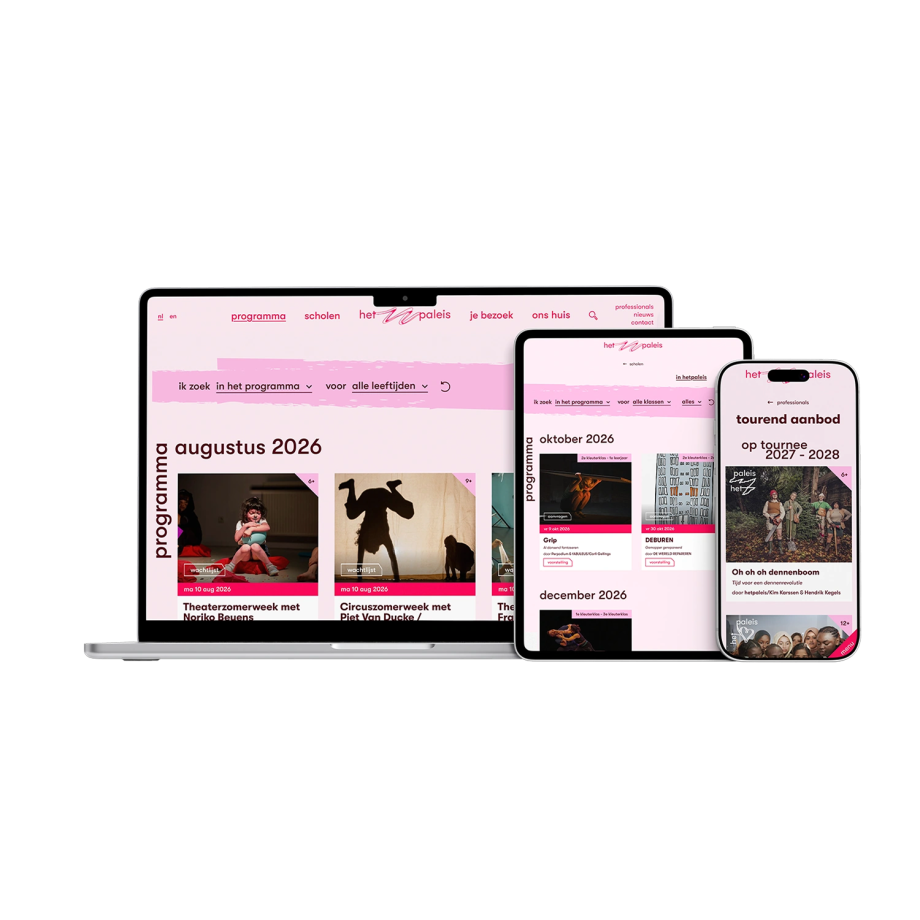
One content structure, three experiences
At the heart of the new website is Architect Events, an event management module that centralizes seasons, productions, genres, venues, and creators.
From this single source of truth, hetpaleis decides how a production is presented as:
- a public performance,
- a school performance,
- touring content for professional programmers.
One production. One place to manage it. No fragmented URLs.
For the public
Visitors can browse a clear programme with filters that match the way people naturally search: by age, genre, or date.
The system also takes minimum and maximum age recommendations into account, so a seven-year-old automatically sees the most relevant performances without requiring parents to manually filter the programme.
For schools
A dedicated section presents school performances organized by educational target group, supplemented with teaching materials for each production.
Reservations are managed at the school level rather than being tied to an individual teacher. This prevents booking information from being lost when a staff member changes roles or leaves the school.
For professionals
A protected environment allows programmers and booking professionals to explore hetpaleis' touring productions, discover creators, and get in touch.
The section is invisible to the general public while remaining easily accessible for professionals without requiring individual user accounts.
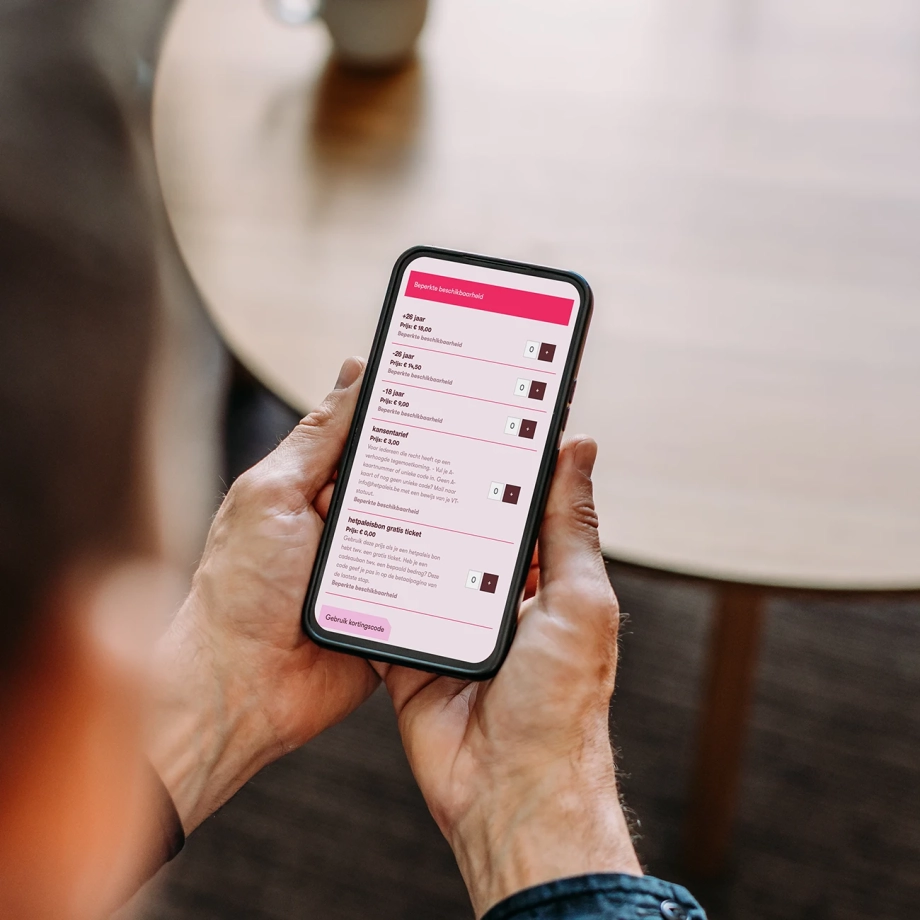
Real-time integrations
- Yesplan manages all event planning data, including touring performances that are not available in ticketmatic.
- ticketmatic manages all ticketing information.
The website connects both systems so that planning data is automatically reflected online without any manual intervention.
Event-specific information is also sent back to ticketmatic, allowing that data to be included automatically in visitor service emails. hetpaleis no longer has to manage this communication manually.
Finally, the website synchronizes with publiq's UiTdatabank, ensuring that hetpaleis' events automatically appear on UiTinVlaanderen and related cultural calendars. For organizations in the cultural sector, this is a standard integration requirement that has been built directly into the platform.
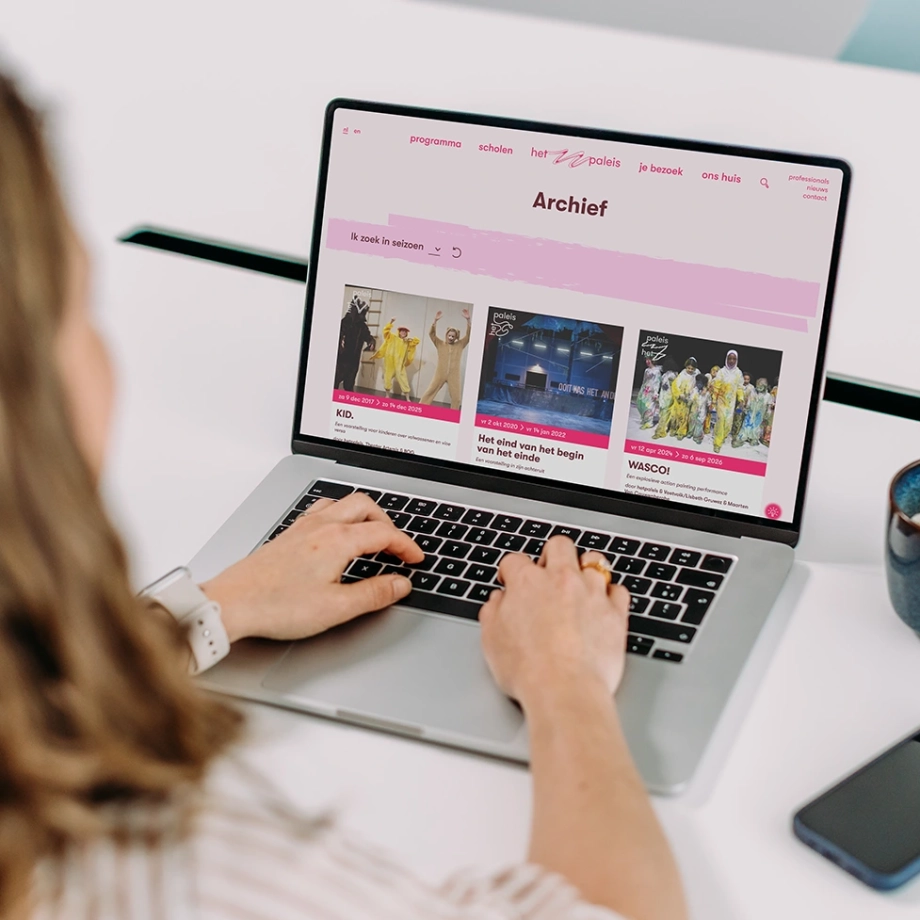
The archive
The complete hetpaleis archive (covering years of productions, creators, and seasons) has been integrated into the new database structure.
This preserves the organization's rich history internally while keeping historical content discoverable through search engines. As a result, the SEO value built up over many years is retained without requiring a continuous stream of new content.
The archive also solves a long-standing content management challenge. When a production returns for a new season, the same production page is reused and automatically updated with the latest information.
The history of previous performances remains intact, ensuring that both visitors and search engines always arrive on the correct, up-to-date page while preserving valuable historical content.
The result
The new content structure resolves hetpaleis' primary SEO challenge: every production has a single canonical page that always displays the most current edition.
Visitors arriving through Google now land on the correct page for their specific context.
The integrations with Ticketmatic and Yesplan ensure that event information and ticket availability remain synchronized automatically. Event-specific data is also sent back to Ticketmatic for inclusion in service emails, creating a fully automated communication workflow.
Processes that previously required manual follow-up now happen automatically.
The migrated archive also strengthens long-term organic visibility. Historical content that would normally disappear during a website relaunch continues to contribute to the site's search performance.
On our previous website, different types of performances (public, school, and touring productions) were mixed together, while returning productions sometimes caused outdated Google search results. Visitors lost their overview and occasionally arrived at the box office expecting the wrong performance.
The new website brings much more structure to our programme, with clear user journeys for our different audiences and a more logical way of managing productions. We also have far more opportunities to express our own visual identity online. It feels like a huge step forward.
Ready to bring structure to your programme?
We're happy to think along on how we can align your programming, ticketing, and audience journey, the way we did for hetpaleis.